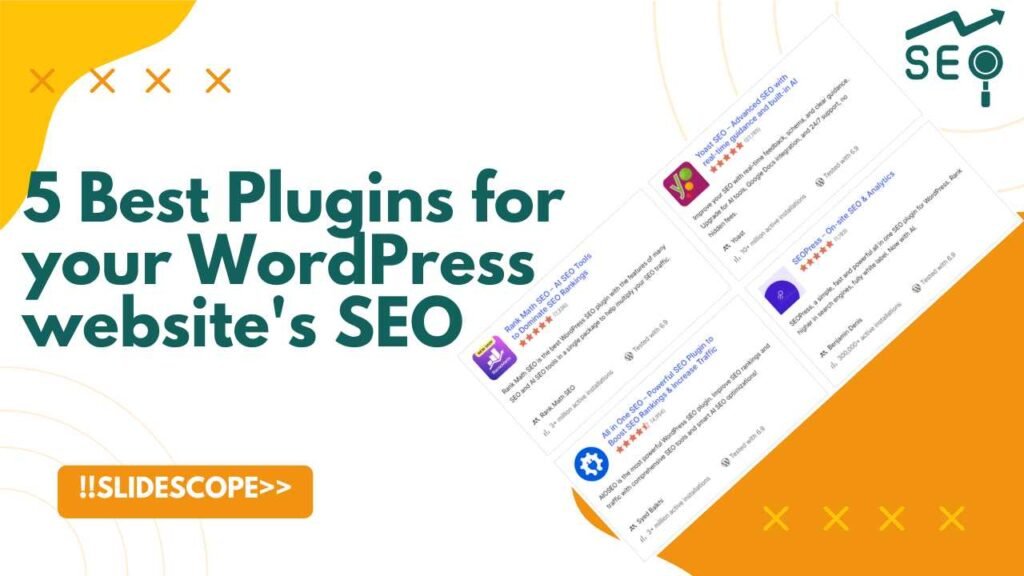
Introduction
When I audit WordPress websites—whether for startups, educators, service businesses, or content creators—one pattern shows up consistently: great content and design, but weak SEO foundations. Most sites don’t fail because they lack effort; they fail because SEO is either overcomplicated or ignored until traffic stalls. That’s exactly where the right WordPress SEO plugin becomes a strategic asset rather than just another install.
Over the last 15+ years working across digital marketing, analytics, and WordPress development, I’ve seen SEO plugins evolve from simple meta-tag editors into full-scale optimization systems. Today, an SEO plugin doesn’t just help you “rank a post.” It shapes how search engines crawl your site, how users perceive your brand in search results, and how scalable your content strategy becomes over time.
However, installing too many SEO plugins or choosing the wrong one can actually hurt performance—slowing down your site, creating conflicts, or leading to misconfigured technical SEO. That’s why I always recommend choosing one strong SEO plugin that aligns with your business goals, technical comfort level, and growth plans.
The five plugins covered above are not random recommendations. They represent the most reliable SEO philosophies in the WordPress ecosystem:
- content-first optimization,
- data-driven control,
- business-focused SEO,
- developer-grade flexibility,
- and performance-led automation.
Whether you’re running a blog, a corporate website, an eCommerce store, or an education platform, these plugins form the backbone of a sustainable SEO strategy. With the right configuration, they reduce manual effort, enforce best practices, and allow you to focus on what actually drives rankings—quality content, user experience, and authority.
1. Yoast SEO
Yoast SEO is one of the most trusted and widely used WordPress SEO plugins, especially for content-focused websites. Its biggest strength lies in making on-page SEO simple and structured, even for non-technical users. The plugin provides real-time content analysis while you write or edit posts, checking keyword usage, headings, internal links, meta descriptions, and readability.
One of Yoast’s standout features is its focus keyphrase optimization. You can assign a primary keyword to each page, and Yoast evaluates how well that keyword is integrated across important SEO elements like the title tag, URL slug, meta description, image alt text, and body content. This ensures your pages are properly optimized for search intent.
Yoast also excels in technical SEO fundamentals. It automatically generates XML sitemaps, manages canonical URLs to avoid duplicate content issues, and allows easy control over index/noindex rules for posts, pages, categories, and archives. Breadcrumb schema can be enabled with minimal effort, improving site structure and search appearance.
Another major advantage is readability optimization. Yoast checks sentence length, paragraph structure, passive voice usage, and transition words. While readability is not a direct ranking factor, it significantly improves user engagement and time-on-page—signals that indirectly benefit SEO performance.
For advanced users, Yoast offers schema enhancements, social media previews, and integrations with tools like Semrush for keyword suggestions. The plugin is particularly useful for blogs, business websites, and educational platforms that rely heavily on content marketing. If your SEO strategy revolves around publishing optimized, high-quality content consistently, Yoast SEO remains a reliable and beginner-friendly choice.
2. Rank Math
Rank Math has rapidly gained popularity by offering advanced SEO features that traditionally required multiple plugins. It is designed for users who want powerful SEO control without compromising ease of use. The setup wizard is especially impressive, guiding users through configuration based on website type, industry, and SEO goals.
One of Rank Math’s strongest features is its modular architecture. You can enable only the SEO modules you need—such as local SEO, image SEO, redirections, schema, or WooCommerce SEO—keeping your website lightweight and fast. This modular approach is ideal for performance-focused websites.
Rank Math provides multi-keyword optimization, allowing you to optimize a single page for multiple focus keywords. This is particularly useful for long-form content, pillar pages, and service pages that target several closely related search queries. The built-in keyword ranking tracker adds further value by showing how your pages perform directly inside WordPress.
Schema markup is another area where Rank Math shines. It supports rich snippets for articles, products, FAQs, events, reviews, recipes, and more—without needing a separate schema plugin. Proper schema implementation improves click-through rates by enhancing your appearance in search results.
The plugin also includes advanced technical SEO tools, such as 404 monitoring, redirection management, XML sitemap customization, and Google Search Console integration. These features help identify crawl errors and traffic drops quickly.
Rank Math is especially suitable for SEO professionals, agencies, and business owners who want deeper control over optimization while keeping everything centralized in one plugin.
3. All in One SEO
All in One SEO (AIOSEO) is a veteran WordPress SEO plugin that focuses on stability, clarity, and comprehensive SEO coverage. It is particularly well-suited for business websites, service providers, and eCommerce stores that need reliable optimization without excessive complexity.
AIOSEO simplifies meta tag management, allowing easy customization of titles and descriptions for posts, pages, categories, products, and custom post types. Dynamic tags help maintain consistency while saving time across large websites.
The plugin offers robust XML sitemap and RSS sitemap functionality, ensuring search engines can efficiently crawl your content. You can exclude specific pages, prioritize content types, and control update frequencies, which is useful for structured SEO strategies.
One of its strongest areas is local SEO optimization. Businesses can add location data, business schema, opening hours, and contact details to improve visibility in local search results and Google Maps. This makes AIOSEO a strong option for local service providers and brick-and-mortar businesses.
AIOSEO also integrates well with WooCommerce SEO, optimizing product pages, category pages, and schema for online stores. This improves product discoverability and rich result eligibility.
Security-conscious users appreciate AIOSEO’s clean codebase and consistent updates. For websites that prioritize stability, business SEO fundamentals, and long-term scalability, All in One SEO remains a dependable choice.
4. SEOPress
SEOPress is a powerful yet lightweight SEO plugin designed for users who want full control without unnecessary branding or upsells. It is especially popular among developers, agencies, and performance-focused site owners.
One of SEOPress’s biggest advantages is its white-label capability, making it ideal for client projects. You can remove plugin branding from the WordPress dashboard, offering a clean and professional experience for clients.
SEOPress provides comprehensive on-page SEO tools, including content analysis, unlimited focus keywords, custom meta titles and descriptions, and social media previews. The interface is minimal and efficient, avoiding distractions while still delivering detailed optimization insights.
From a technical SEO perspective, SEOPress handles XML and HTML sitemaps, canonical URLs, noindex rules, and redirects with precision. It also supports Google Analytics integration, allowing tracking without external plugins.
Schema support is another strong point. SEOPress allows manual and automated schema implementation for articles, breadcrumbs, products, events, and local businesses. This flexibility is valuable for advanced SEO strategies.
Because of its speed and clean architecture, SEOPress is an excellent option for websites where performance, customization, and developer-level control matter more than beginner-friendly handholding.
5. The SEO Framework
The SEO Framework is designed for users who value automation, speed, and clean SEO practices. Unlike many SEO plugins, it avoids aggressive upsells, ads, and unnecessary complexity, making it a favorite among developers and minimalists.
Its biggest strength is automated SEO optimization. The plugin intelligently generates SEO titles and descriptions based on content and context, reducing the need for manual configuration while maintaining search engine best practices.
The SEO Framework focuses heavily on performance optimization. It is extremely lightweight, ensuring minimal impact on page load times. This makes it ideal for high-traffic websites and Core Web Vitals–focused SEO strategies.
The plugin handles canonical URLs, structured data, robots meta tags, and duplicate content prevention automatically. Its spam protection features also help prevent SEO abuse in comment sections and archives.
While it lacks flashy dashboards, The SEO Framework excels in delivering clean, standards-compliant SEO that aligns closely with Google’s guidelines. It is best suited for technically sound websites that want “set it and forget it” SEO without sacrificing quality.
For users who prioritize speed, automation, and long-term SEO stability, The SEO Framework is a strong and understated choice.
Conclusion
Choosing the right SEO plugin for your WordPress website is less about features on paper and more about alignment with how you work and where your website is headed. Every plugin discussed serves the same core purpose—helping search engines understand, rank, and present your content—but they approach that goal very differently.
If your strategy revolves around content marketing, blogging, and editorial discipline, plugins like Yoast SEO provide a structured framework that trains writers to think in SEO terms. Its readability analysis and on-page checks act as guardrails, ensuring consistency across teams and contributors. This is especially useful for growing websites where multiple authors publish content regularly.
For users who want maximum power and visibility into SEO performance, Rank Math stands out as a complete control panel. Its modular design, built-in schema, and keyword tracking capabilities make it suitable for SEO professionals and advanced site owners who prefer data-backed decisions inside WordPress itself. When configured correctly, it can replace multiple standalone SEO tools.
Business-focused websites—especially local services and WooCommerce stores—benefit from the stability and clarity offered by All in One SEO. Its emphasis on structured business data, local SEO, and clean metadata management makes it a dependable long-term solution. It may not feel flashy, but it delivers consistent results where commercial intent matters most.
SEOPress appeals to those who value performance, customization, and control without noise. Agencies, developers, and technically inclined marketers appreciate its white-label capability and lightweight architecture. It proves that advanced SEO doesn’t need aggressive dashboards or constant prompts—just precise execution.
Finally, The SEO Framework represents the philosophy of quiet automation. It’s built for users who understand SEO fundamentals and want the plugin to handle best practices silently in the background. For performance-critical websites and minimal setups, this “set it and forget it” approach reduces overhead while maintaining compliance with search engine guidelines.
The most important takeaway is this: no SEO plugin can replace strategy. These tools don’t rank websites—people do, through informed decisions, quality content, internal linking, and continuous optimization. A plugin simply ensures that your efforts are translated correctly for search engines.
My recommendation is to choose one plugin, configure it thoroughly, and commit to it long-term. Avoid plugin-hopping. Invest time in understanding how your chosen tool handles metadata, schema, sitemaps, and indexing. When combined with strong content, fast performance, and clear search intent, the right SEO plugin becomes a silent growth engine—working for your website 24/7 without constant intervention.
SEO is not about shortcuts. It’s about systems. And the right WordPress SEO plugin is one of the most important systems you’ll ever put in place.