Introduction
Data analytics is no longer just an optional technical skill—it has become one of the most powerful career paths for students who want strong job security, high growth, and global opportunities. Whether you are a college student, a recent graduate, or someone planning a career switch, data analytics offers roles that combine logic, creativity, and real business impact. However, learning data analytics today is very different from how it was taught even a few years ago.
Students often face confusion when choosing how to learn analytics. Should you enroll in a long-term degree program, join an online course, or learn tools individually from YouTube? With rapid changes in AI, analytics tools, and employer expectations, outdated learning paths can waste both time and money. What students need today is focused, flexible, and career-oriented training that builds practical skills and prepares them for real jobs—not just certificates.
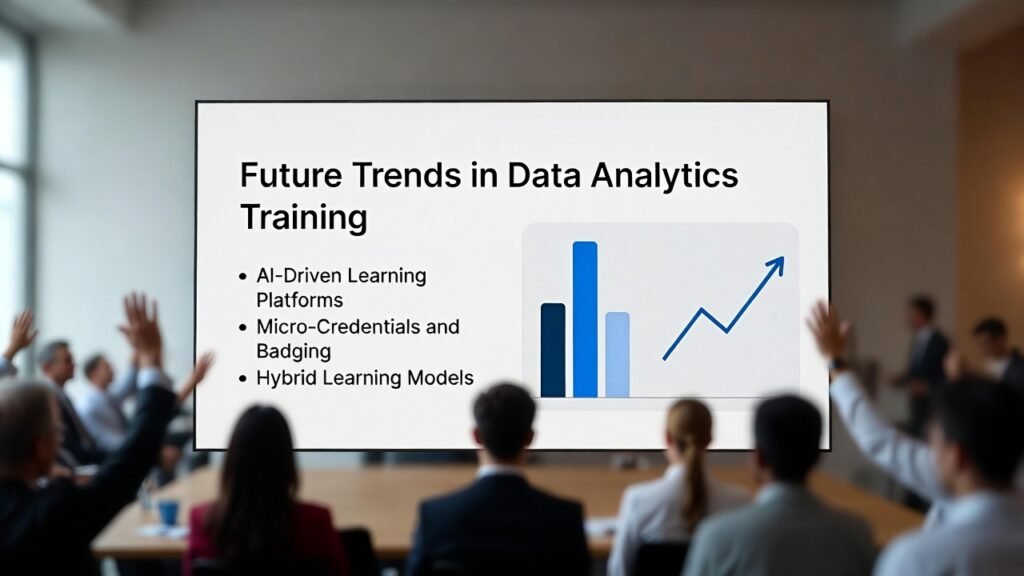
This is where new trends in data analytics training are changing the game. AI-driven learning platforms now help students learn at their own pace, identify weak areas, and get instant support while practicing. Micro-credentials allow students to build skills step by step instead of committing to long academic programs. Hybrid courses combine online flexibility with live mentorship and hands-on projects, helping students gain confidence and real-world exposure.
For students, these trends mean faster learning, better clarity about career paths, and stronger job readiness. Instead of asking “Which degree should I do?”, the smarter question today is “Which skills should I build first, and how can I prove them?” Understanding the future of data analytics training helps students make informed decisions, avoid common mistakes, and design a learning journey that leads directly to employability and long-term career growth.
1. Why Data Analytics Learning Is Changing for Students
For students today, learning data analytics is no longer just about getting a certificate or completing a course—it is about becoming job-ready. Companies expect freshers and early-career professionals to work with real data, use modern tools, and explain insights clearly. This has forced a major shift in how data analytics is taught.
Earlier, students depended heavily on college syllabi or long-term degree programs. The problem is that these programs often update slowly, while analytics tools and industry expectations change every year. Students now need faster, more flexible learning paths that help them build skills aligned with real job roles such as Data Analyst, Business Analyst, or BI Developer.
This gap between traditional education and industry needs is the main reason why new training models are emerging.
2. AI-Driven Learning: A Game Changer for Students
AI-driven learning is transforming how students learn data analytics by making education personal, adaptive, and practical.
Personalized Learning Paths
Every student has a different background. Some are good at math, some at Excel, some at coding, and some are complete beginners. AI-powered learning platforms analyze your performance and adjust the course flow accordingly. If you struggle with SQL joins, the system gives you more practice. If you already know Excel basics, you move ahead faster.
This saves time and reduces frustration—two major problems students face while learning analytics.
Instant Doubt Solving with AI Tutors
Instead of waiting for a live class or mentor, students can now ask AI tutors questions like:
- “Why is my SQL query not returning correct results?”
- “Explain DAX measures in simple terms.”
- “How do I improve this dashboard?”
This instant support encourages practice, which is essential for mastering analytics.
Career-Oriented Skill Recommendations
AI systems also guide students on what to learn next based on job market demand. Instead of randomly picking tools, students get a structured roadmap aligned with roles such as:
- Excel → SQL → Power BI for Business Analysts
- Python → Data Cleaning → Visualization for Data Analysts
This clarity helps students avoid confusion and wasted effort.
3. Micro-Credentials: Learning Skills Without Long-Term Risk
Micro-credentials are short, focused certifications designed to teach one specific skill at a time. For students, this is one of the biggest advantages in modern analytics education.
Learn Small, Grow Fast
Instead of enrolling in a 1–2 year program, students can start with:
- Excel for Data Analysis
- SQL Fundamentals
- Power BI Dashboard Development
Each micro-credential can be completed in weeks, not years. This builds confidence and momentum.
Stack Skills Step by Step
Students can stack multiple micro-credentials to build a strong profile:
- Beginner: Excel + SQL
- Intermediate: Power BI + Data Modeling
- Advanced: Python + Predictive Analytics
This approach allows students to grow gradually without financial or academic pressure.
Strong Resume Value
Employers prefer students who can prove skills, not just list courses. Micro-credentials are skill-based and assessment-driven, making them more meaningful on resumes, LinkedIn profiles, and interviews.
4. Hybrid Courses: The Best Learning Model for Students
Hybrid learning combines online learning + live mentorship + hands-on projects, making it ideal for students.
Online Flexibility with Real Support
Students can learn theory through recorded sessions at their own pace while attending live classes for:
- Doubt clearing
- Project reviews
- Concept reinforcement
This balance helps students stay disciplined without losing flexibility.
Hands-On Projects with Real Data
Modern analytics training focuses heavily on projects such as:
- Sales and profit dashboards
- Marketing campaign analysis
- Financial performance reports
- HR analytics dashboards
Working on real datasets helps students understand how analytics is used in actual companies.
Mentorship and Career Guidance
Hybrid programs allow instructors to guide students on:
- Portfolio building
- Resume optimization
- Interview preparation
- Tool selection based on career goals
This mentorship plays a huge role in student success.
5. Focus on Business Thinking, Not Just Tools
One of the biggest mistakes students make is focusing only on tools. Employers want analysts who can:
- Understand business problems
- Choose the right metrics
- Explain insights clearly
Modern training programs teach students how to think like analysts, not just dashboard creators.
Students learn:
- How to ask the right questions
- How to convert data into insights
- How to present findings to non-technical people
This skill set separates average candidates from strong hires.
6. Domain-Specific Analytics for Students
Students now have the option to specialize early by choosing domain-focused analytics tracks such as:
- Finance & CFO Analytics
- Marketing & Growth Analytics
- HR & People Analytics
- Operations & Supply Chain Analytics
Domain knowledge increases employability and helps students target specific industries instead of applying randomly.
7. Automation and No-Code Tools in Analytics Training
Modern analytics tools are becoming easier to use. Students are now trained on:
- Automated data cleaning
- AI-assisted dashboards
- Low-code analytics platforms
This allows even non-technical students to enter analytics roles faster while still learning core concepts.
8. Continuous Learning Mindset for Students
Data analytics is not a one-time learning process. Tools, AI features, and business needs keep evolving. Future-ready students:
- Regularly update skills
- Work on new datasets
- Follow analytics trends
- Improve communication skills
Training programs now support this through ongoing access to updated content and projects.
Conclusion
For students planning a career in data analytics, the future is full of opportunity—but only for those who learn smartly. The field is expanding rapidly, yet competition is also increasing. What will separate successful students from the rest is not how many courses they complete, but how effectively they build relevant skills, apply them to real problems, and adapt to changing industry needs.
AI-driven learning is a major advantage for students. Instead of struggling with generic lessons, students can now learn analytics in a personalized way that matches their pace and background. If you find statistics difficult, AI systems can slow down and reinforce fundamentals. If you are comfortable with Excel or SQL, you can move faster toward advanced analytics. This reduces frustration, builds confidence, and helps students stay consistent—something many learners struggle with.
Micro-credentials are equally powerful for students because they reduce risk. Rather than investing years in a single program, students can start small, learn one skill at a time, and see results quickly. Each micro-credential becomes proof of your ability, not just attendance. Over time, stacking these credentials helps students build a strong profile that employers actually value. For students from non-technical backgrounds, this approach makes data analytics far more accessible.
Hybrid courses bring the missing piece many students need: guidance and real-world exposure. Watching videos alone is rarely enough. Students need feedback, mentorship, doubt-solving, and project reviews to truly grow. Hybrid learning provides structure without removing flexibility. It allows students to learn online while still benefiting from expert instruction, peer interaction, and industry-focused projects.
Most importantly, students must understand that data analytics is not about tools alone. Employers look for candidates who can think analytically, understand business problems, and communicate insights clearly. Training models that combine technical skills with projects, case studies, and presentation practice prepare students for this reality far better than purely theoretical learning.
The students who succeed in the coming years will be those who treat learning as a continuous process, stay updated with AI and analytics trends, and focus on building practical, job-ready skills. By choosing the right training approach—one that is flexible, skill-focused, and industry-aligned—students can turn data analytics into a long-term, high-growth career rather than just another qualification.
Disclaimer
This article is intended for educational and informational purposes only. Career outcomes in data analytics depend on individual effort, skill development, learning consistency, and market conditions. Students should evaluate courses and career decisions based on their personal goals and current skill levels.