Introduction: The Rise of AI-Generated Content
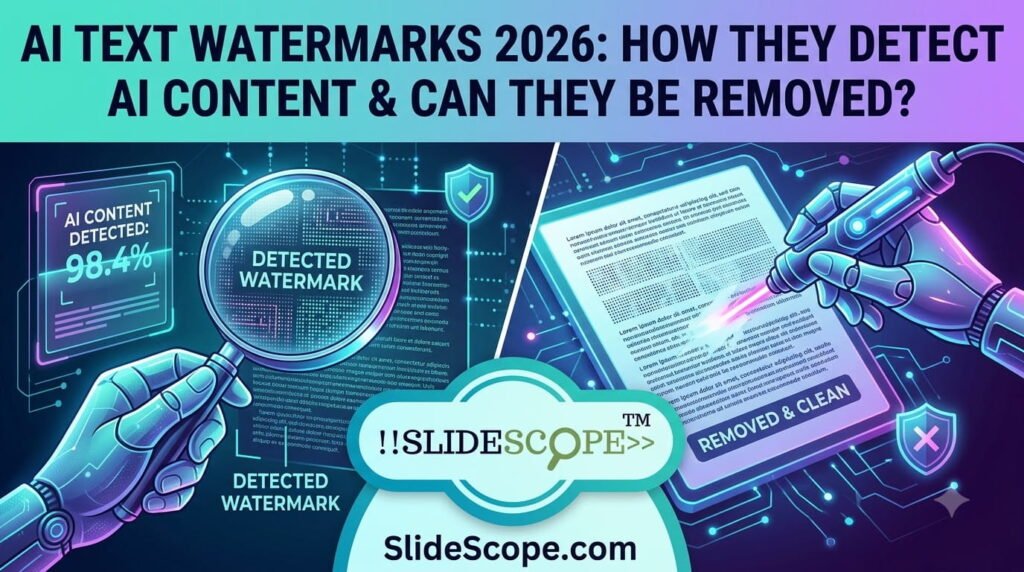
The year is 2026, and artificial intelligence has become an inseparable part of how we create content. From blog posts and marketing copy to academic essays and even code, large language models (LLMs) have transformed the creative landscape. Yet with this transformation comes a persistent concern: how do we distinguish between human and machine-generated text? Enter AI text watermarking—a technology designed to embed invisible signatures into AI output, allowing detection systems to flag content that lacks human authorship.
As someone who has spent years training thousands of students in programming, data analytics, and AI through platforms like Slidescope and Udemy, I’ve watched this space evolve from experimental prototypes to mainstream practice. In this comprehensive guide, I’ll walk you through how AI watermarks work in 2026, why platforms adopted them, the detection mechanisms involved, and the realistic possibilities—and limitations—of removing or circumventing them.
What Are AI Text Watermarks?
At its core, an AI text watermark is a subtle, often invisible pattern embedded within the generated text. Unlike a traditional watermark that might overlay a logo on an image, a text watermark operates at the level of word choice, sentence structure, and even the probabilistic patterns of token selection. The goal is to leave a statistical “fingerprint” that detection algorithms can recognize without noticeably altering the readability or meaning of the text.
In 2026, watermarking has become a standard feature in most major LLM platforms. OpenAI, Anthropic, Google, and even open-source model providers have integrated watermarking capabilities either natively or via third-party APIs. The watermark is typically embedded during the model’s generation process, meaning the output is designed from the start to carry this signature.
Why Platforms Use Watermarks
The motivations behind watermark adoption are multifaceted:
- Academic Integrity: Universities and schools worldwide have struggled with students submitting AI-written essays. Watermarks provide a scalable way to identify such submissions.
- Content Farm Quality Control: Platforms that host user-generated content want to reduce the flood of low-quality, SEO-optimized AI articles that clog search results and diminish genuine human creativity.
- Copyright and Attribution: As AI models train on vast datasets, watermarks help trace the origin of specific text segments, supporting fair-use debates and copyright claims.
- Misinformation Prevention: In journalism and social media, watermarks can help quickly identify AI-generated propaganda or fake news, allowing for faster fact-checking and labeling.
From my work advising businesses on digital marketing strategies through GlobalITConsultant.com, I’ve seen how content farms proliferate. Watermarks represent an attempt to restore equilibrium, giving marketers and editors a tool to maintain authenticity at scale.
How Detection Systems Identify Watermarks
Detection isn’t magic—it’s statistics. Here’s the typical flow:
1. Probability Profiling
Modern LLMs select the next token (word or subword) based on probability distributions. A watermarked model subtly biases these probabilities. For instance, when the model would normally choose “the” with 40% probability, it might nudge that to 38% and adjust another word accordingly. Over a full paragraph, these micro-adjustments create a detectable pattern.
2. Statistical Tests
Detection tools analyze a text sample and compute various statistical metrics:
- Entropy measures: Watermarked text often shows lower entropy in specific token positions.
- N-gram frequency shifts: The relative frequencies of word sequences may differ from natural human writing.
- Chi-squared tests: Comparing observed token distributions against expected human-written distributions.
3. Model-Specific Signatures
Each LLM provider has its own watermarking algorithm. A detector trained on OpenAI’s watermark won’t necessarily catch Anthropic’s output. In 2026, we see a market of specialized detectors—some generic, some model-specific—each with varying accuracy rates.
4. Human-in-the-Loop Verification
Many platforms combine automated detection with human review. A high watermark probability score triggers a deeper dive, where an editor looks for telltale signs: unusual phrase repetition, lack of personal anecdote, or overly polished yet sterile language.
Can Watermarks Be Removed? The Reality Check
This is the question on everyone’s mind. The short answer: Removing a watermark without degrading text quality is extremely difficult, and in many cases, impossible without fundamentally rewriting the content. Let’s explore why.
The Information-Theoretic Problem
A watermark embeds information into the text’s structure. To remove it while preserving meaning, you’d need to alter the text in ways that either destroy the watermark signature or introduce new, detectable artifacts. Because the watermark is intertwined with word choices that also affect readability, any tampering risks making the text sound unnatural.
Common “Workarounds” and Their Effectiveness
- Paraphrasing: Rewriting the text using different words can break the specific probability patterns the watermark relies on. However, sophisticated paraphrasing tools may inadvertently re-introduce watermark-compatible patterns, or they may change the meaning entirely.
- Translation-Loop: Translating text to another language and back (sometimes called “translation round-trip”) can scramble watermark patterns. In practice, this often degrades quality and may not fully remove the signature.
- Human Editing: Having a human rewrite the content from scratch effectively removes the watermark, but this defeats the purpose of using AI for efficiency. Moreover, if the human merely polishes AI-generated text without substantial reworking, residual patterns may remain.
- Adversarial Perturbation: Some researchers have experimented with adding carefully crafted noise to text to confuse detectors. While theoretically interesting, this approach is rarely practical for mainstream use and can introduce grammatical errors.
The Cat-and-Mouse Game
Watermarking and watermark-removal techniques are in an arms race. As detection algorithms become more sensitive, watermarking methods evolve to be more robust. By 2026, we’re seeing watermarks that adapt in real-time based on content context, making static removal techniques increasingly ineffective.
Practical Implications for Different Users
For Educators and Academics
If you’re an instructor concerned about student submissions, watermarks provide one data point—but they shouldn’t be the sole basis for academic integrity decisions. I recommend using watermark detectors as flagging tools, always corroborating with evidence of writing process (drafts, outlines, revision history) and oral defenses.
For Content Marketers and Businesses
Through my consultancy work, I advise clients to view watermarks as a quality filter rather than a enforcement mechanism. If you’re commissioning AI-assisted content, establish clear guidelines with your writers about disclosure and originality. Watermark scores can guide revisions, ensuring the final output meets your brand’s authenticity standards.
For Writers and Creators
Embrace watermarks as a signal of quality. Just as we judge a photograph by its resolution, readers and editors can use watermark awareness to discern the level of human involvement in a text. Transparency about AI use can actually build trust with audiences who value honesty.
The Bigger Picture: Beyond Watermarks
Watermarks are just one piece of the AI content authenticity puzzle. In 2026, we’re also seeing:
- Provenance Tracking: Blockchain-based systems that record the entire content creation journey, from prompt to final output.
- AI-Illiteracy Detection: Training humans to recognize stylistic markers of AI writing, complementing technological detection.
- Regulatory Frameworks: Laws like the EU AI Act are beginning to mandate disclosure of AI-generated content in certain contexts.
As educators and digital marketers, our focus should shift from “detect vs. hide” to “how do we coexist with AI productively?” The most successful approaches combine technological tools with human judgment, ethical guidelines, and a commitment to genuine value creation.
Practical Guidelines for Working with AI-Generated Content
Based on my experience training over 10,000 students and professionals, here are actionable recommendations:
- Always Disclose: When using AI assistance, label the content. Transparency fosters trust and often increases engagement.
- Add Personal Experience: Inject your own stories, case studies, or data. This is the most effective way to dilute any watermark signature while enriching the content.
- Use Multiple Sources: Blend AI-generated drafts with research, interviews, and data from diverse origins. This creates a richer, more credible narrative.
- Iterate and Refine: Treat AI output as a first draft, not a final product. Multiple rounds of human editing, fact-checking, and restructure yield the best results.
- Leverate Detectors Constructively: If you’re publishing publicly, consider running your content through a watermark detector pre-emptively. Use the score as a revision guide, not a pass/fail verdict.
Case Studies: How Different Sectors Are Adapting
Higher Education
A university in Europe recently implemented a policy where all submitted essays are scanned for watermark probabilities. Scores above 70% trigger a mandatory interview with the student. The result? A 40% drop in suspected AI submissions within one semester, but also increased student awareness of proper citation and original thought practices.
Corporate Marketing
A global consultancy I work with integrated watermark checking into their content production pipeline. Editors now receive a “watermark health report” alongside each draft. This has reduced time spent on rewriting AI-polished text by 30%, as the flags point directly to sections needing human infusion.
Open-Source Community
Developers building custom LLMs have started experimenting with modular watermarking—embedding signatures only when desired, such as in marketing materials but not in code comments or internal documentation. This nuanced approach respects the different authenticity needs across content types.
The Future: Beyond 2026
Looking ahead, several trends will shape the watermark landscape:
- Real-Time Adaptive Watermarks: Models that adjust watermark intensity based on content sensitivity, reducing false positives in creative writing while maintaining detection in high-stakes contexts.
- User-Controlled Watermarking: Allowing content creators to opt-in or opt-out of watermarking, giving authors agency over their digital footprint.
- Cross-Modal Watermarking: Extending watermark concepts beyond text to images, audio, and video, creating a unified authenticity ecosystem across all media.
- AI-Generated Content Licensing: Watermarks may evolve into licensing tokens, automatically enforcing attribution and usage terms whenever content is reproduced.
Conclusion: Embracing Authenticity in the AI Era
AI text watermarks in 2026 represent a pragmatic attempt to navigate the tension between AI’s creative potential and our collective desire for authenticity. They are not a silver bullet, nor should they be viewed as the sole solution to content integrity. Instead, they are a tool—one that works best when combined with human insight, ethical practices, and a genuine commitment to value-driven creation.
As Ankit Srivastava, someone who has guided thousands of learners through the intricacies of technology and digital marketing, I see the real opportunity not in outsmarting detectors, but in using AI to amplify human creativity. The most compelling content in 2026 will be that which transparently leverages AI’s strengths while unapologetically infusing human perspective, experience, and wisdom.
Whether you’re an educator, marketer, writer, or business leader, the path forward is clear: embrace the technology, respect the integrity of human expression, and let authenticity be your guiding principle. The tools may change, but the goal—meaningful, trustworthy communication—remains constant.

Ankit Srivastava is an IT trainer, technology educator, and digital skills mentor with expertise in programming, data analytics, AI, and software development. He has successfully trained thousands of learners, with more than 10,000 student enrollments on Udemy. His practical teaching approach empowers students and professionals to build in-demand technical skills. Colorstech channel where Ankit posts video tutorials has more than 8000 Subscribers.